
Religion and Astrology: The Sacred Sky and the Popes Who Read It
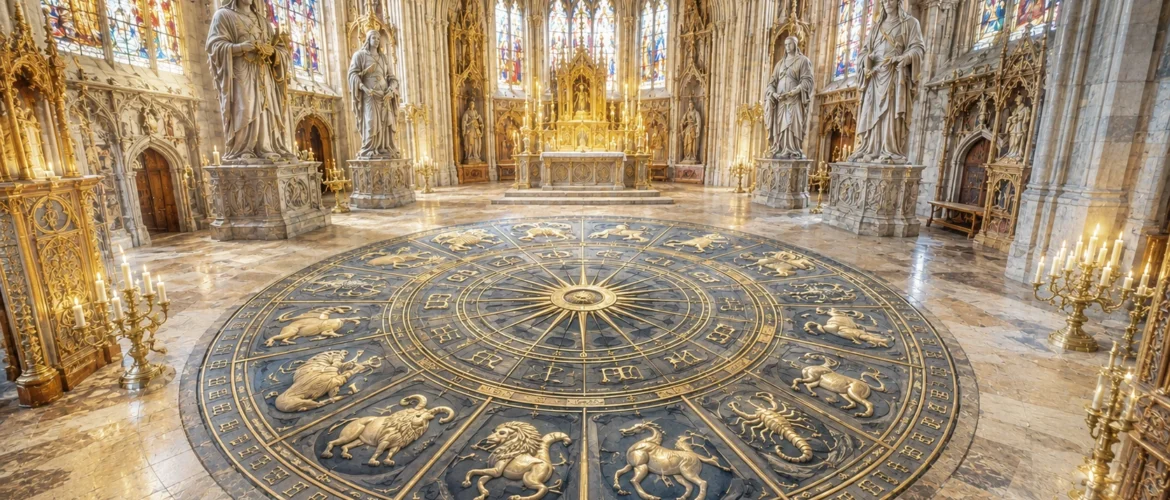
Here is something that surprises almost everyone, my loves: for most of history, religion and astrology were not enemies. They were companions. The same priests who prayed also watched the stars, the same cathedrals that held the cross were built around the zodiac, and — yes, really — popes kept astrologers at their side. Somewhere along the way we were taught that faith and the stars belong to different rooms. They never did. Let me show you how deeply they are connected, and tell you a little of my own place in this story.
The Same Ancient Root
Religion and astrology grew from a single question asked while looking up at the night sky: what is the relationship between the heavens and us?
The religious traditions asked, “What do the heavens tell us about the Creator?” The esoteric traditions asked, “What do the heavens tell us about the soul?” Both are sacred questions, and for thousands of years they were asked side by side. The old teaching “as above, so below” is not a slogan from a crystal shop — it is a genuine spiritual principle that shaped temples, scriptures, and cathedrals alike. The sky was humanity’s first holy book.
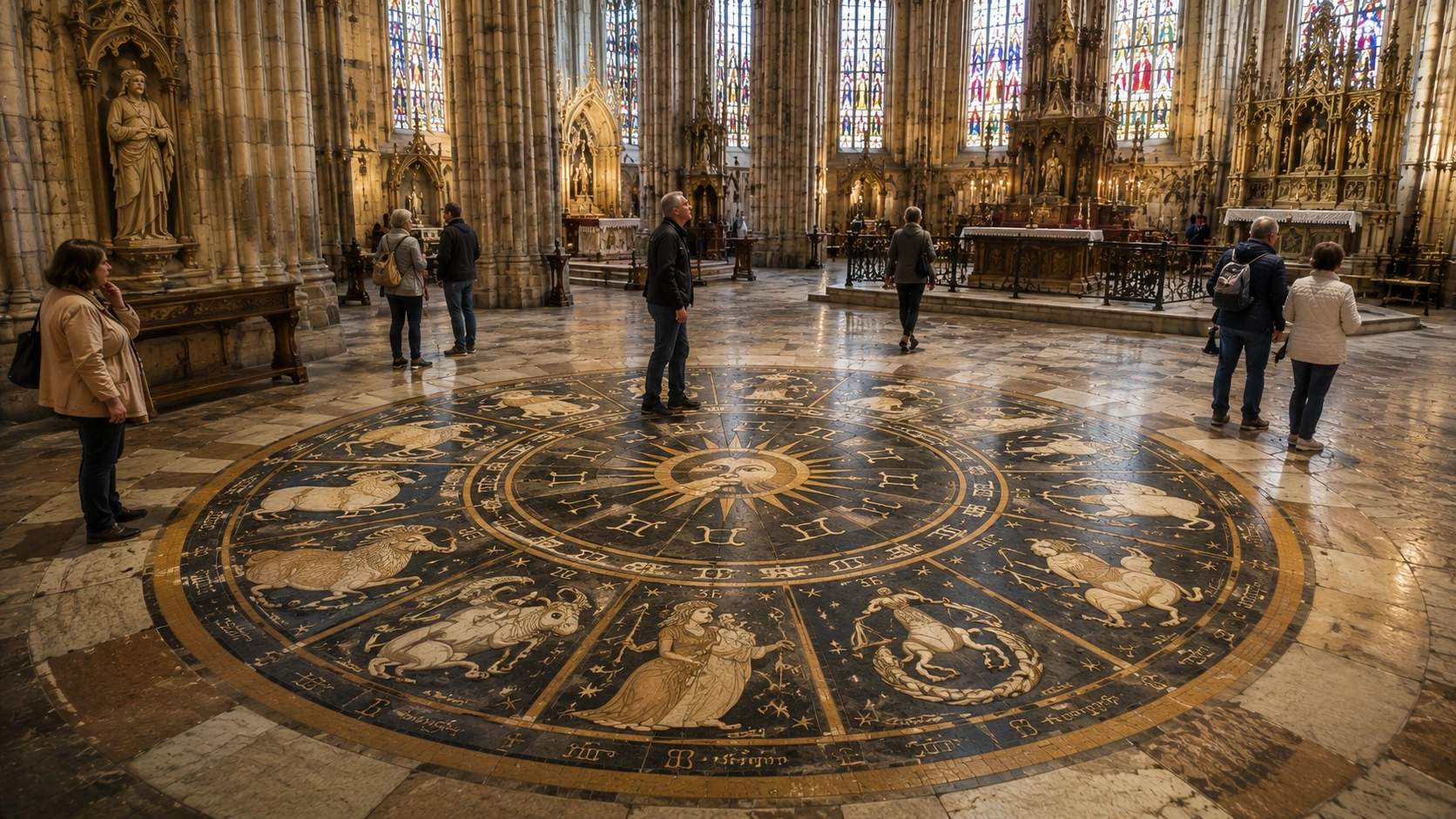
The Astrologers at the Manger: The Magi
If you were raised in the Christian world, you already know an astrology story by heart — you just may not have noticed.
The “three wise men” who followed a star to the birth of Christ were, in the original telling, the Magi — astrologer-priests from the East who read the sky and understood that a great soul had been born. In other words, the very first people the Gospel sends to honor Christ are astrologers, guided by a star. That single image tells you how close these two worlds once stood.
When the Church Studied the Stars
The Church’s relationship with the stars was never simple — later centuries would bring real condemnations, and we will come to those. But for most of its history, the Church did not stand outside celestial study. It wove it into the heart of its own learning.
In the great universities the Church built — Bologna, Padua, Paris, Salamanca, Oxford — astrology was taught as a serious subject, and astrologers held university chairs. Charts were even cast for the founding of universities themselves. In the Renaissance, the priest and philosopher Marsilio Ficino wrote a whole book, On Drawing Life from the Heavens, blending astrology, medicine, music, and prayer. And when the calendar itself was reformed into the one we still use today — the Gregorian calendar of 1582 — it was done under papal sponsorship, using deep knowledge of the movements of the sky. The Church did not stand outside astronomy. It carried it.
The Popes Who Kept Astrologers
And now the part people can hardly believe. Some of the most powerful popes in history did not merely tolerate astrology — they lived by it.
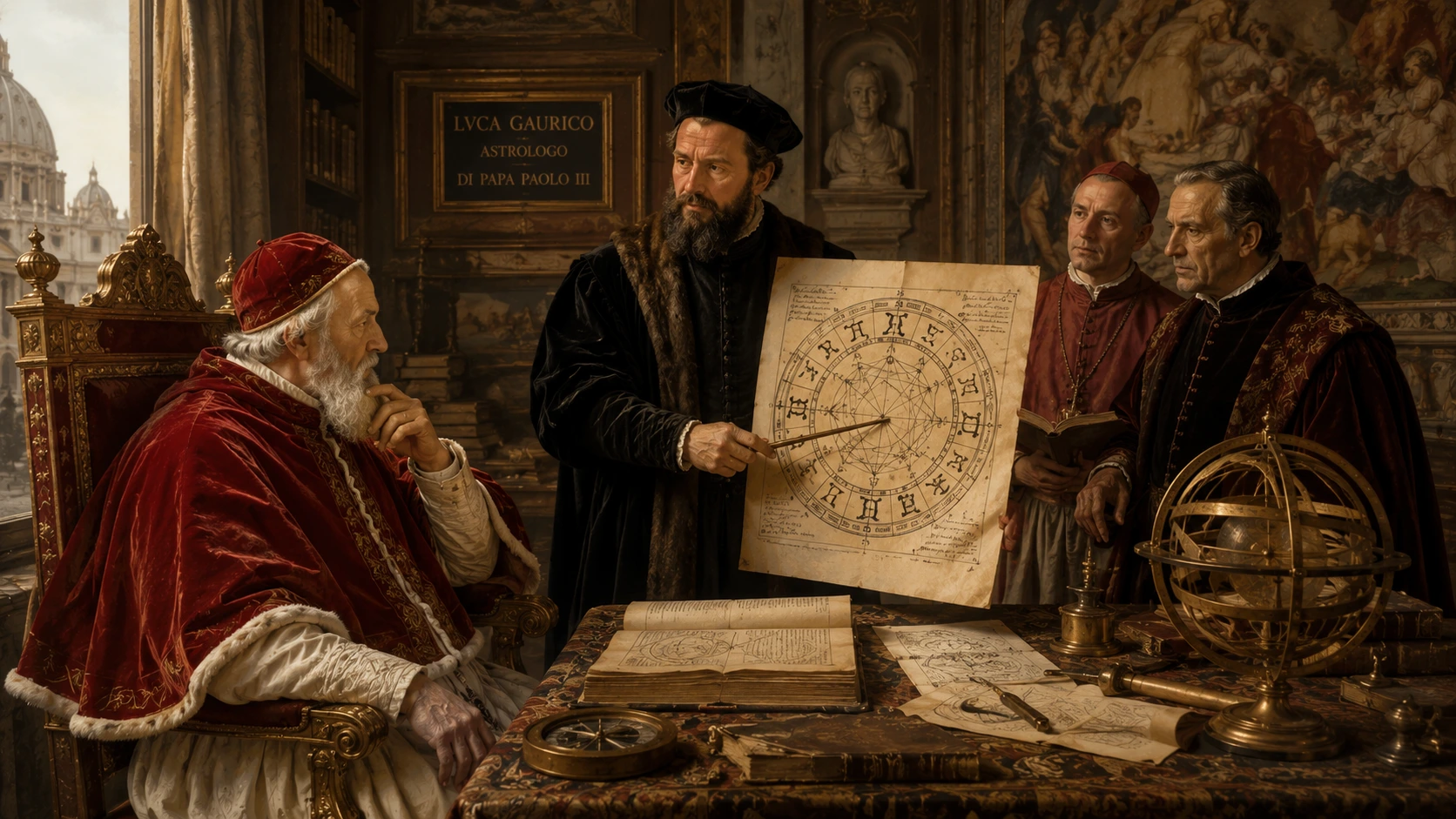
Pope Sixtus IV consulted astrologers on the timing of important events. Pope Julius II — the towering pope who commissioned Michelangelo’s Sistine Chapel ceiling — had the chart of his own coronation cast, choosing the sacred moment by the stars. Pope Paul III, the very pope who summoned the Council of Trent, employed the famous astrologer Luca Gaurico, and even raised him to the rank of bishop. Gaurico had already served Julius II and Leo X before him. These were not fringe figures; they were the men at the summit of the Church, quietly guided by the same sky the shepherds and the Magi once watched.
But Isn’t Astrology Forbidden in the Bible?
Now let me answer the question you may have been holding since the first paragraph, my loves — because you deserve an honest answer, not a convenient one.
Yes, there are warnings. Scripture speaks against divination, against fortune-telling, against worshiping the sun and moon as gods rather than as creations. And yes, the Church did eventually issue condemnations: Pope Sixtus V in 1586, Pope Urban VIII in 1631, both aimed at what was called judicial astrology — the practice of predicting a person’s fate as if it were fixed, and of claiming to know things reserved to God alone.
But notice carefully what is being forbidden. Not the study of the heavens. Not the belief that creation is meaningful. What is forbidden is fatalism — the claim that a chart decides your life and you have no say in it. And here is the thing: that is not what I teach, and it is not what the great astrologers of the Church taught either. Even Thomas Aquinas, who wrote carefully on this, held that the stars may incline, but they do not compel. The chart describes the weather. You still choose how to walk through it.
So the honest picture is not “the Church loved astrology” or “the Church banned astrology.” It is that the Church, like every serious tradition, drew a line — between reading the sky as a sacred language, and using it to sell certainties that belong to God. The first was taught in its universities for centuries. The second was condemned. I stand firmly, gratefully, on the first side of that line.
Religion and Astrology Across the World
This closeness was never Christianity’s alone. It belonged to every great tradition.
The city of Baghdad, one of the glories of the Islamic world, was founded in the year 762 on a date chosen by the astrologer Mashallah. Jewish sages like Abraham ibn Ezra wrote deeply on the stars. And the Church’s bond with the sky continues even now: in 1891 Pope Leo XIII refunded the Vatican Observatory, and to this day the Church employs astronomers who study the heavens from the papal grounds. The languages differ, but the reverence is the same: the sky as a doorway to the divine.
A Personal Note From Me
I want to be honest with you about why I teach this the way I do. For me, these traditions are not only history read from a book. I am an initiate.
I have been initiated into the living mystical practices that stand behind these traditions — the esoteric current that has always flowed quietly beneath the outer forms of religion. So when I speak of “as above, so below,” of sacred timing, of the soul’s journey through the heavens, I am not describing something I have merely studied. I am describing a path I walk. I sit in both worlds at once: the scholar who can show you the popes and the cathedrals and the dates, and the initiate who knows, from the inside, that the sky truly is sacred. That is the tradition I carry to you — rigorous and reverent, historical and alive.
Reclaiming a Sacred Heritage
So the next time someone tells you that astrology and faith cannot belong together, you may smile gently, my loves. History is entirely on your side.
The Magi were astrologers. The universities of the Church taught the stars. Popes timed their coronations by the heavens, and the Vatican still watches the sky. To study astrology is not to step away from the sacred — it is to pick up one of the oldest sacred languages humanity has ever spoken.
If you long to learn that language yourself — the sky as our ancestors, our priests, and our mystics knew it — this is the heart of our Religious & Esoteric Astrology course. Brand new to charts? Start with Basic Astrology and build from the ground up.
Ancient wisdom, modern astrology. See you in class.
FAQ
Is astrology a sin?
Traditions differ, and later Church authorities did condemn fortune-telling. But for most of history religion and astrology were studied side by side — by the Magi, by Church universities, and by popes themselves.
Does the Bible mention astrology?
Yes. The Magi who followed a star to Bethlehem were astrologer-priests from the East, reading the sky to recognise that a great soul had been born.
Did popes really use astrologers?
Several did. Julius II had the chart of his coronation cast, and Paul III employed the astrologer Luca Gaurico and raised him to bishop.
Was astrology taught at universities?
It was — at Bologna, Padua, Salamanca and elsewhere, astrology held university chairs within institutions the Church itself founded.
Does the Vatican still study the sky?
Yes. Pope Leo XIII refounded the Vatican Observatory in 1891, and the Church employs astronomers to this day.