
The Beautiful Astrology Hidden in Your Calendar

The calendar hanging on your wall looks like the most ordinary thing in the world, my loves. But it is secretly one of the most astrological objects you own. The year it counts is a sun cycle, the weeks it divides are made of planets, and the great reform that gave us this calendar was done for one reason above all: to keep our human time in step with the sky. Today, let me show you only that — the hidden thread between our modern calendar and astrology.
A Calendar Reset to the Sun
The calendar we use today is called the Gregorian calendar, after Pope Gregory XIII, who reformed it in the year 1582. And the whole reason for that reform was, at heart, astronomical — which is to say, astrological.
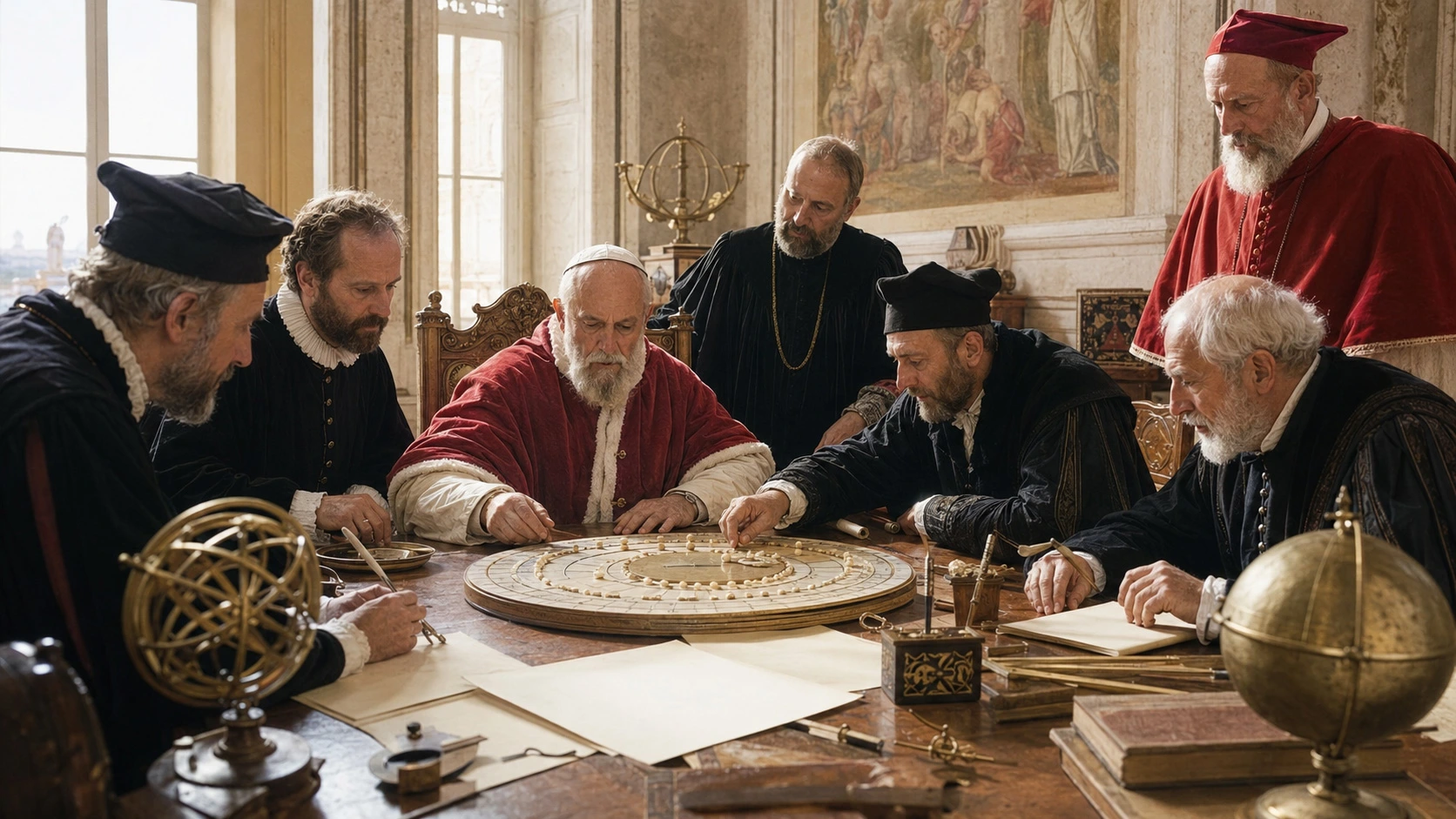
The older Julian calendar counted the year as a little too long, so over the centuries our human dates slowly drifted away from the real position of the Sun. By 1582, the spring equinox — the sacred moment when the Sun crosses into Aries and the zodiac begins again — had slipped some ten days out of place. This mattered enormously, because the Church set Easter by the sky itself: the first Sunday after the first full moon after the spring equinox. A calendar that had wandered off from the Sun and Moon could no longer find its own holy days. So Gregory corrected it, realigning our dates with the true solar year. In other words, the calendar on your phone exists to keep you synchronized with the Sun — the very same Sun astrology has always followed.
The Seven Planetary Days of the Week
Now look closer, at the week. Why seven days? Not because of anything on Earth — but because of the seven classical planets of astrology.
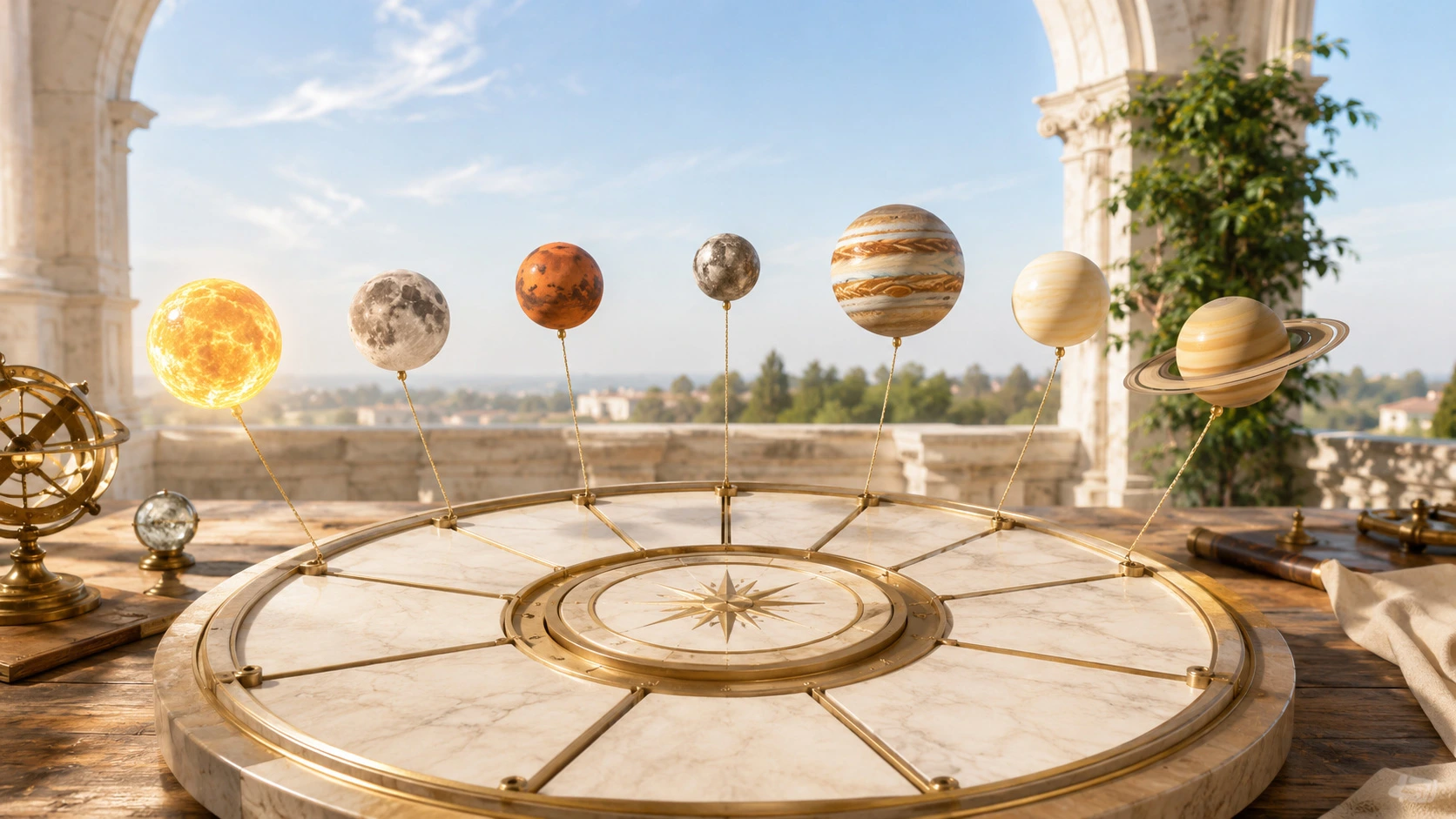
Long before our modern calendar, the ancients named each day of the week after one of the seven wandering lights of the sky, in a sacred order. You can still hear it perfectly in Latin and the Romance languages:
- Sunday — the Sun (domenica). Vitality, identity, the self.
- Monday — the Moon (lunedì). Feeling, memory, the inner world.
- Tuesday — Mars (martedì). Drive, courage, action.
- Wednesday — Mercury (mercoledì). Mind, speech, exchange.
- Thursday — Jupiter (giovedì). Growth, luck, meaning.
- Friday — Venus (venerdì). Love, beauty, harmony.
- Saturday — Saturn (sabato). Structure, discipline, time.
Every single week, without knowing it, the whole world is quietly turning through a little astrological wheel.
Your Birthday Is an Astrological Address
Once you see this, a date stops being a plain number. It becomes a kind of cosmic address.
Your birthday tells us where the Sun was standing in the zodiac — your Sun sign. And the day of the week you were born tells us which planet was, in the old tradition, the lord of that day, lending its color to your arrival. The modern calendar did not erase this. It simply carries the old sky forward, hidden in plain sight, in every date we write.
A Personal Note: Born on the Day of Venus
Let me show you what I mean using my own birth, because it is a rather beautiful example — and, I confess, one of my favorites.
I was born on the 4th of October, 1985 — and that day was a Friday. In the language of the planetary week, Friday is venerdì, the day of Venus: the planet of love, beauty, harmony, art, and grace. To be born on Venus’s day is to arrive with a natural warmth and magnetism, a love of beauty and connection, a gift for harmony and for drawing people gently together. And here is the part that still makes me smile: my Sun on that October day sits in Libra — and Libra is itself ruled by Venus. So I am Venus-touched twice over: born in her sign and on her day. The chart, as always, was not being subtle.
There is even a little wink of history in my date. The 4th of October is the very day, back in 1582, on which the old calendar took its final breath before the great reform — the world went to sleep on October 4th and woke up ten days later. So my birthday sits exactly on the hinge where time itself was reset and realigned with the stars. For an astrologer, I could not have asked for a more fitting doorway into the world.
The Sky in Every Day
So the next time you glance at the date, remember what you are really looking at, my loves. The year is a journey around the Sun. The week is a circle of planets. Every day carries a celestial ruler, and every birthday is a snapshot of the sky.
The Gregorian calendar did not replace astrology. It quietly preserved it — folding the Sun, the Moon, and the seven planets into the ordinary rhythm of our days.
If you would love to discover the full astrological address of your own birthday — your Sun, your planetary day, and all everything the sky held the moment you arrived — you can learn to read it yourself in our Basic Astrology course, or book a personal natal chart reading and I will read it with you.
Ancient wisdom, modern astrology. See you in class.
FAQ
What planet rules each day of the week?
Sunday belongs to the Sun, Monday to the Moon, Tuesday to Mars, Wednesday to Mercury, Thursday to Jupiter, Friday to Venus and Saturday to Saturn — the seven classical planets of astrology.
Why does the week have seven days?
Because of the seven classical planets. The order is still audible in the Romance languages: lunedì for the Moon, martedì for Mars, venerdì for Venus.
What does it mean to be born on a Friday?
Friday is the day of Venus — love, beauty, harmony and grace. Those born on it often carry a natural warmth and a gift for drawing people together.
Is the Gregorian calendar connected to astrology?
Yes. It was reformed in 1582 to realign our dates with the true solar year, after the spring equinox had drifted ten days out of place.
How do I find out which planet rules my birth day?
Look up the day of the week you were born, then match it to its ruling planet in the list above.